

Description
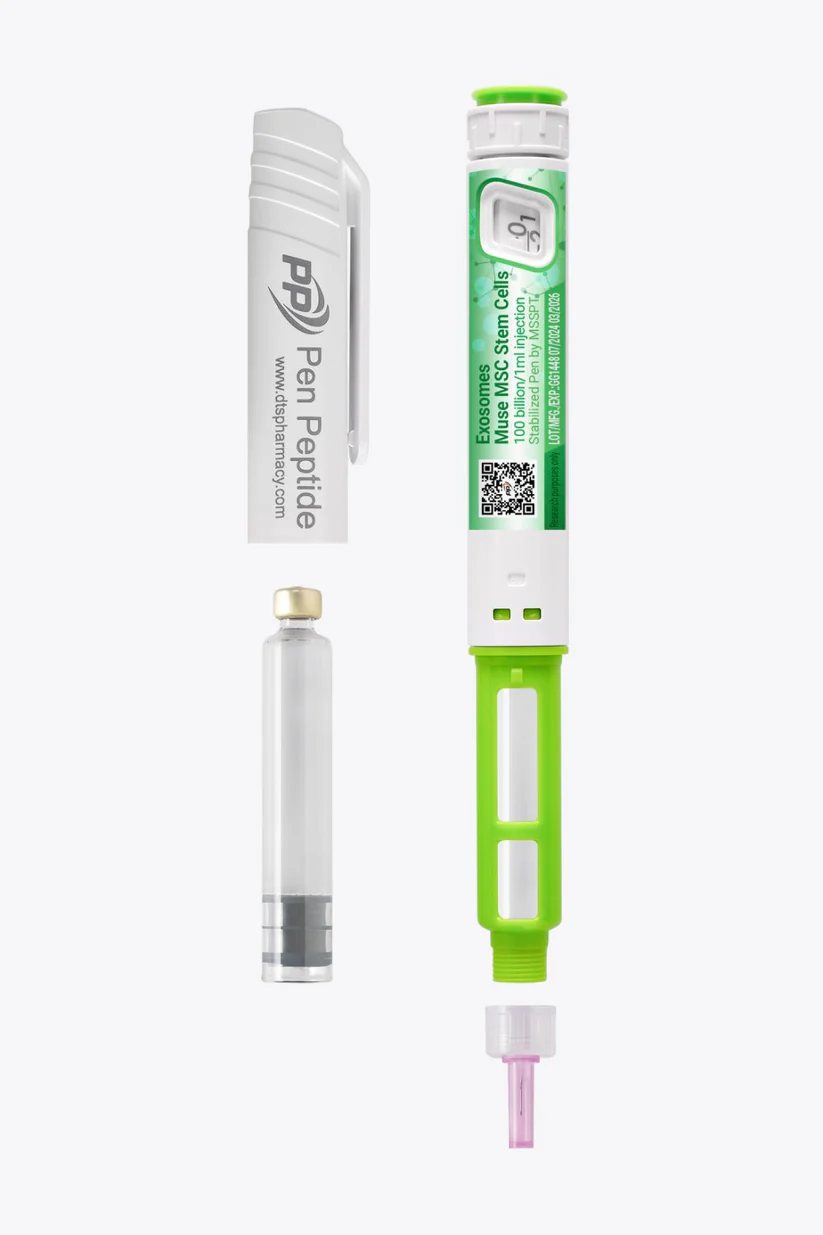
The exosomes from Muse MSC Stem Cells are offered in an innovative format – a pre-stabilized liquid pen, developed specifically for research protocols in the field of regenerative biology and cellular signaling. This form ensures a high concentration of bioactive components combined with high dosing accuracy, guaranteeing consistency and reliability in studies.
The stabilized liquid form allows direct use, eliminating the need for additional mixing or processing. This ensures optimal precision and facilitates application in research conditions.
What are exosomes?
Exosomes are nanoparticles derived from cell membranes that contain a rich array of signaling molecules – microRNA, mRNA, lipids, and proteins. They are a natural means of communication between cells and play a key role in maintaining physiological stability.
Scientific research shows that exosomes actively participate in processes related to repair, regeneration, and cellular adaptation to stress factors.
Biological role of exosomes
The main function of exosomes is to transmit molecular signals between different cells and tissues. They can activate regenerative mechanisms, support angiogenesis, and influence the immune system.
Their importance positions them as a key subject of research, covering both regenerative medicine and the processes of cellular aging.
Uniqueness of Muse MSC exosomes
Exosomes from MUSE MSC (Multilineage-differentiating Stress-Enduring Stem Cells) stand out for their resistance to cellular stress and their ability to maintain functional activity even under unfavorable conditions.
Their stable profile positions them as an advanced generation of biological carriers with potential in various areas of precision and personalized therapy. Compared to exosomes from other sources, Muse MSC demonstrate:
- Higher capacity for cellular regeneration.
- Improved resistance to oxidative stress.
- Greater stability in molecular composition.
- Enhanced efficiency in intercellular communication – providing more precise and targeted transfer of signaling molecules.
- Richer protein and RNA profile – containing diverse bioactive components essential for regenerative mechanisms.
- Strong anti-apoptotic potential – supporting cellular resilience and reducing cell death under stress.
- Broader spectrum of effects – influencing more cellular pathways related to repair and longevity.
- High biocompatibility – natural origin that minimizes the risk of adverse interactions.
Mechanism of action of exosomes
Exosomes act as mediator nanoparticles that transfer key signaling molecules between cells. Their interaction with the cell surface and intracellular mechanisms occurs in several main ways:
- Surface receptors – bind to membrane receptors and trigger cascades of signals that regulate processes such as proliferation, differentiation, and repair.
- Endocytosis – are internalized by cells and release their contents inside, modifying metabolic and genetic mechanisms.
- Membrane fusion – upon direct contact they transfer their lipids, proteins, and RNA molecules into the cytoplasm of the cell.
Through these pathways, exosomes deliver regulatory factors that can alter gene expression, improve the cellular response to stress, and support regeneration. This mechanism makes them a key tool for maintaining cellular plasticity and tissue repair.
Exosomes and cellular communication
As natural molecular mediators, exosomes maintain coordinated intercellular signaling – a process essential for tissue homeostasis and systemic balance. They play an active role in:
- Synchronizing cellular responses – coordinating the reactions of different cell populations.
- Maintaining tissue homeostasis – balancing tissue growth, repair, and degradation.
- Coordinating repair processes – supporting regeneration in response to damage and stress.
In scientific research, exosome-mediated cellular communication is considered a fundamental basis for future biomedical applications and novel therapeutic approaches.
Key benefits of exosomes according to research
Accumulated scientific data highlight that exosomes – and particularly those derived from Muse MSC (Multilineage-differentiating Stress-Enduring Stem Cells) – demonstrate a wide spectrum of biological effects, making them a valuable tool for studies related to cellular repair, regeneration, and longevity.
- Regeneration and repair – exosomes support the processes of repairing damaged tissues by transferring signaling molecules that stimulate cellular activity and renewal. This makes them a subject of research in regenerative biology, where mechanisms to activate the body’s natural repair capacities are being sought.
- Anti-aging potential – one of the most promising directions is their role in slowing cellular aging. By reducing oxidative stress and limiting damage to DNA and proteins, exosomes are studied as a factor capable of maintaining cells in a “functionally younger” state for a longer period of time.
- Support of cellular longevity – Muse MSC exosomes stand out for their potential to extend the functional lifespan of cells by enhancing their resilience to stressful and unfavorable conditions – a key aspect in longevity research and maintaining cellular health.
- Immunomodulation – exosomes play a crucial role in maintaining a balanced immune response. They can reduce excessive inflammatory activity while supporting the body’s defense mechanisms. This property is especially valuable in research focused on chronic inflammation and autoimmune reactions.
- Improved cellular resilience – thanks to their stable composition, Muse MSC exosomes help cells withstand oxidative stress and unfavorable conditions. This is a key factor in studies on aging and longevity.
- Cellular plasticity and adaptability – exosomes promote the ability of cells to change and adapt to new conditions, which is critical for tissue repair, regeneration, and maintaining a dynamic cellular environment.
Muse MSC exosomes are regarded as molecular mediators of rejuvenation and repair, combining regenerative and anti-aging potential. They open new perspectives for research in the field of cellular health, longevity, and the possibilities of slowing down the biological processes of aging.
Dosage and different formats of Exosomes (Muse MSC Stem Cells) | Pre-Mixed Stabilized Pen
The product is available in several formats:
100 BIL/1ml – sufficient for 5 days (total 100 units in pen)
200 BIL/2ml – sufficient for 10 days (total 200 units in pen)
300 BIL/3ml – sufficient for 15 days (total 300 units in pen)
Daily dosage in research protocol: 20 units once per day.
Biocompatibility and tolerance
Due to their natural origin, exosomes are characterized by high biocompatibility and low risk of immune reactivity. Data confirm a good tolerance profile in various research protocols. However, individual response may vary and should be considered in the context of the specific protocol.
For laboratory purposes and personal observation only.





Reviews
There are no reviews yet.